Small Receipts, Big Weekend: A Family Campground Budget That Breathes
The campground reservation is the easy part. You pay the fee, pick the site, and feel smug for about a week. Then you arrive, realize the ice chest is already sweating, and make the first $8 ice run. By Sunday, that $8 has siblings: firewood, a shower token, mini golf, a camp-store popsicle, and the rope bracelet your kid swears will change their life. None of these costs is a crisis. Together, they are why a budget-minded weekend can still feel expensive.
The $8 Ice Run Is Never Just $8
Nobody drives to the camp store for ice and comes back with only ice. You need ice because the cooler is warming up, and while you are there, the firewood bundle looks dry, the kids discover the candy aisle, and someone remembers the marshmallows are gone. That is not a moral failure. It is how campground stores work. The trick is to plan for the small run instead of pretending it will not happen.
The Quiet Line Items
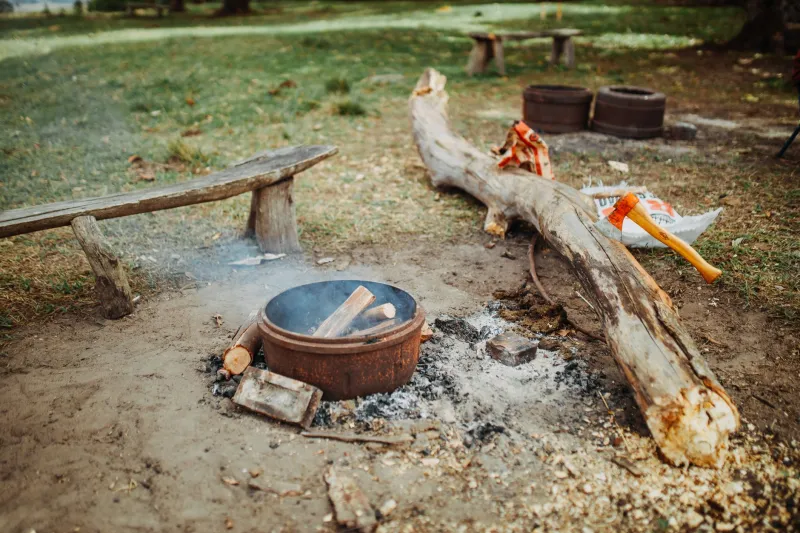
Most campground budgets focus on the site fee and food. The sneaky costs live in between. Firewood often runs $8 to $12 a bundle, and a cool evening can eat two or three. Ice is $3 to $6 a bag, and a hot weekend can take four. Shower tokens might be 50 cents to $2 each, which is cheap until four people need two showers. Activity fees—mini golf, kayak rentals, craft kits, pancake breakfasts—can add $5 to $15 per person without much warning. Then there is the dump station, laundry, bait, and the camp store’s greatest hits.
This is not a reason to skip the fun. It is a reason to name the fun before you go.
A Flexible Sample Budget for a Family of Four
For a two-night 2026 weekend, a reasonable middle-ground budget might look like this: campsite fee, $90 to $150; firewood, $30; ice, $20; camp store snacks and small extras, $40; activities, $30; shower tokens, $8; and a $40 contingency. That is roughly $258 to $318 before travel and main meals. If that feels high, cut the activities first and keep the ice. If it feels low, add a little more to the contingency and call it honest.
The point is not to hit a number. The point is to know which number you are spending toward. A budget that breathes is better than a spreadsheet that snaps.
Kid Spending Rules That Actually Work
Give each kid a small camp-store allowance—$10 is plenty for younger children, $15 for older ones—and let them make their own mistakes. They will probably buy something plastic. That is part of the lesson. A few rules help: one souvenir per trip, no buying before the first full day, and no checkout impulse items unless it is on the list. If you want to add a little math, let them earn extra camp-store money by helping with firewood, dishes, or tent cleanup.
The goal is not to make kids feel deprived. It is to teach them that a campground store is full of choices, and choices have limits.
What Is Worth Paying For
Some campground costs are worth every dollar. Local firewood keeps the campfire going and supports the campground. Ice keeps food safe. A shower token after a sweaty hike is not a luxury. An activity that gets the family together—a hayride, a craft, a guided hike—can be the memory you talk about on the drive home. A site with shade or electric hookup may cost more, but it can save a trip.
Skip the duplicate gear you can borrow, the extra snacks bought at the last minute, and the souvenir that will be lost by Tuesday. Pay for warmth, safety, and shared time. Let the rest go.
Carry Small Bills and a Little Grace
Bring cash for small fees and keep a $20 bill in the glove box for the unexpected. Check the campground’s activity schedule before you promise the kids mini golf. Ask the office what is included and what costs extra. And when the $8 ice run turns into $26, do not let it ruin the weekend. A campground budget is not a test of discipline. It is a tool for saying yes to the right things—and no to the things you will not remember anyway.