Wet Weekend, Happy Kids: Camping Through Rain Without Calling It Quits
A 70 percent chance of rain used to feel like a cancellation notice to me. Now it feels like a packing instruction. Some of the best family camping weekends I have had started with gray skies, a muddy path, and a tarp flapping in the wind while somebody shouted that the cards were getting wet. Rain does not have to end the trip. It just changes the job from ‘enjoy the outdoors’ to ‘build a small, dry outdoors.’
At Duncan’s Family Campground, we have seen plenty of families pull in under a drizzle, set up with a shrug, and have a perfectly good time. We have also seen people bail at the first sprinkle and spend the drive home wondering if they gave up too soon. This is the rain plan I wish every family had taped inside the camper door.
Read the forecast like a camper, not a worrier
A daily rain percentage is close to useless. It tells you almost nothing about when the rain arrives, how hard it falls, or whether your tent will be sitting in a puddle by dinner. So look at the hourly view and the radar loop instead. The National Weather Service forecast is free and local, and a quick look at the animated radar shows whether a band is going to pass through in 40 minutes or park over your loop for six hours.
Ask three questions. Is this a passing shower or a all-afternoon soaker? Is there wind with it? And is the ground already saturated from earlier rain? A steady drizzle is a completely different animal from a line of thunderstorms, and a wet site with a flash flood watch is different again. Pack for the rain you are actually likely to get, not the vague gray cloud on your phone’s home screen.
Build a roof that actually works
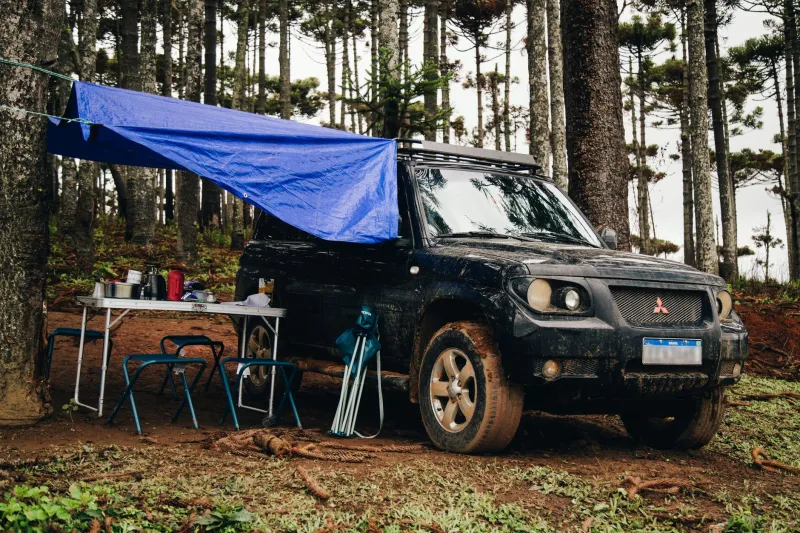
The number one rain mistake is throwing a tarp over the picnic table and calling it shelter. Water needs somewhere to go. If the tarp sags, it collects a pond, and eventually that pond wins. Tie a ridge line between two trees or use two upright poles, then pitch the tarp so one end is noticeably higher than the other. A good slope is steep enough that you can see water running off the low side instead of pooling in the middle.
Use guy lines and stakes to hold the edges out. Ball bungees are handy for attaching the tarp without tearing grommets, and they give a little when the wind gusts. If you are using an RV awning, lower one leg so the water rolls off, and bring the awning in if the wind starts to gust hard. An awning full of water is heavy, and an awning caught by a gust is expensive. Keep the slope, keep the tension, and check the low corner every couple of hours.
Turn the dry zone into a room
A tarp over a table is shelter. A tarp with a purpose is a room. Put down a small mat or blanket, set up chairs around the table, and claim one corner for the gear you want to keep dry: the card deck, the books, the headlamps, the dry socks. A shallow plastic bin works as a tabletop catch-all and keeps small stuff from sliding into the mud.
This is also where you stage the wet-afternoon activities before anyone gets bored. A deck of cards, a few comic books, modeling clay, a small puzzle, and a couple of dry towels can carry a family through two hours of rain without anyone melting down. If the rain is light and the kids have boots, send them on a puddle walk around the loop and have them come back to the tarp for hot cocoa. If it is pouring, keep them close and break out the silly games. Boredom is a bigger threat than dampness.
Stop mud at the door
Mud is not a moral failure. It is a traffic pattern. Pick one door or one entry point to the tent or camper and make it the muddy side. Put a rugged mat there, add a boot tray or a shallow bin for wet shoes, and keep a towel within arm’s reach. Kids who know exactly where to ditch their boots are much less likely to track the campground into the sleeping bags.
Keep a second towel just inside the door for hands and paws. If the site has a gravel pad, use it. If it does not, lay a few flat stones or a small scrap of outdoor rug along the path you use most. It will not stop the mud, but it will give everyone a place to wipe their feet before they step inside. The goal is not a clean campsite. The goal is a dry bed.
Dry gear before the car turns into a greenhouse
Wet gear that gets balled up in a car for three hours is a mildew experiment. Have a plan before you break camp. Hang wet towels and clothes on a line under the tarp if the rain has stopped, or drape them over the back of a chair in the sun for a few minutes. Mesh laundry bags are great for separating wet items from dry ones. If the campground has a bathhouse with hooks and ventilation, use it for rain jackets and dish towels.
When you pack the car, keep wet gear in one bin or one trash bag, not mixed in with sleeping bags. At home, set up the tent in the garage or on the driveway and let it dry completely before you store it. Same for the rain fly, the ground cloth, and the camp chairs. A little patience at home saves you from that smell that tells you the tent went away wet.
The one time to pack up early
Most rain is a nuisance, not a hazard. But there is a clear line. If there is lightning anywhere near the campground, get everyone into a hard-sided vehicle or a building. If a flash flood watch turns into a warning, or the road out is already covered, leave. If high wind is forecast and your site is under dead limbs, move to a safer spot or call it. And if a child is genuinely cold, shivering, and cannot get warm, stop being tough and get them dry and warm somewhere else.
That is the honest checklist. Passing showers, muddy boots, and a wet picnic table are not reasons to cancel. Dangerous weather and unsafe conditions are. Make the call early, not at 2 a.m. with a flashlight in your teeth.
The short rain kit
A tarp, ridge line, stakes, and ball bungees. Rain jackets that actually fit. Rubber boots for the kids. A mud mat and a boot bin. Two extra towels. A dry bag for clothes and cards. A headlamp. A trash bag for wet gear. And a flexible attitude. Rain is not a cancellation. It is a different kind of camping weekend, and often the one your kids remember longest.