Cook Once, Eat Twice: A Weekend Kitchen Plan for One Cooler and Two Burners
Two burners sounds generous right up until 6:45 p.m. on a drizzly Friday, when the pasta water is barely simmering, somebody is asking for ketchup, and the six-year-old has announced she is no longer eating red things. That is the moment the fantasy camp kitchen collapses. What saves the weekend isn't better gear. It's a plan that assumes the worst: limited heat, one cooler, tired kids, and weather that reads the forecast and decides to ignore it.
So build the weekend around a simple constraint. Two burners, one cooler, one dinner hour. Everything else follows from there.
Do the Burner Math First
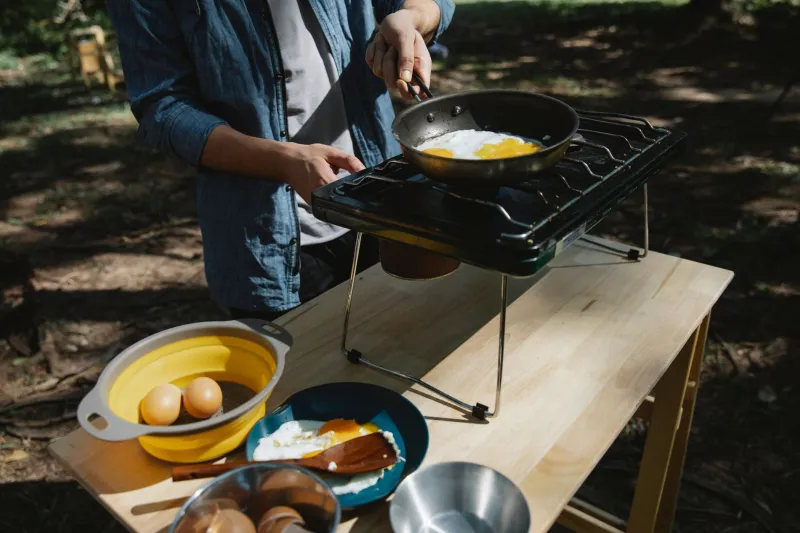
A two-burner camp stove is really a one-pot kitchen wearing a costume. One burner has to hold the long, slow thing. The other handles the fast finish. That means most family camp dinners should be built from a single pot plus a garnish, or a pot plus a griddle that slides over the flame once the water comes off.
Write the order of operations on an index card and tape it inside the camp bin. Ours reads like this: boil first, drain, set aside, then use that same burner for the skillet. Bacon before eggs. Coffee before anything, honestly.
If you're in an RV with a three-burner range and an oven, enjoy your privileges, but the same sequencing rule still applies. Cooking two dishes that both demand full attention at 7 p.m. is how meals get scorched.
Cook Once, Eat Twice
The single best move in camp cooking happens on Thursday, in your own kitchen. Double the batch of whatever you're already making. Rice, pasta, roasted chicken thighs, a tray of sheet-pan vegetables, a pot of chili. Portion it into flat zip-top bags, press them thin, and freeze the ones you won't eat on night one. Flat frozen bags pack like books, and they double as cooler blocks for the first day of the trip.
Two dinners ride along free this way. Night one is reheating. Night two is assembly. Neither requires you to stand at the stove for forty minutes after a hike that ran long.
The Rain Dinner That Doesn't Care
Every trip needs one meal that assumes no flame at all. Not a sad fallback, either, because when the sky opens up over the picnic table, a genuinely good no-cook dinner feels like a small victory.
Some reliable picks:
- Canned chili or lentil soup with tortilla chips, shredded cheese, and a bag of pre-shredded cabbage for crunch
- Peanut noodles made with precooked noodles, a jar sauce, and a squeeze of lime
- Chicken salad wraps with a bagged slaw kit stirred in
- Shelf-stable Indian pouches over microwave rice (RV folks) or instant rice (tent folks)
Tuck these items in a separate tote labeled rain dinner so nobody raids them for lunch on Saturday. The label matters more than it should.
Pack the Cooler in Reverse
Load the cooler by day, not by category. Night two's chicken goes on the bottom; Saturday's sandwiches go on top. Freeze water bottles as filler and drink them as they thaw. Keep the cooler out of the sun and off hot ground, because a cooler sitting on sunbaked asphalt is just an oven with a handle.
Open it once, deliberately, at each meal. The kid who opens the lid to look for a juice box twelve times a day is quietly melting your ice.
Picky Eaters Without Two Separate Dinners
Short-order cooking ruins camping faster than rain. The fix is a build-your-own bar, where the base is the same for everyone and the toppings argue it out at the table.
Taco night is the classic. Seasoned meat or beans in a pot, tortillas warmed over the second burner, then a lineup of cheese, lettuce, salsa, corn, and avocado. The picky one makes a plain cheese tortilla and nobody has to comment on it.
Other bars that work: pasta with three sauce options, baked potato night, rice bowls with whatever's left over. Keep one plain component deliberately unseasoned. Season at the table, not in the pot. And bring a small griddle if you have one, because a quesadilla can rescue almost any dinner standoff.
For tent campers, the cooler swap is simple: skip anything that needs to stay frozen solid past day two, and lean on shelf-stable proteins like tuna, jerky, and pouches. RV families with a real fridge have room to be ambitious. Both should still bring a backup dinner and a granola bar for the hangry hour before the stove even lights.
Cleanup Is a Ritual, Not a Chore
Fifteen minutes, then everyone sits down. That's the rule.
Scrape plates into the trash, not the fire ring. Wipe the pot while it's still warm. Wash in hot soapy water, rinse, and air dry on a towel in the sun. Use a collapsible basin and follow the campground's gray water rules, which usually means dumping at a utility sink or dish station, never on the ground or into the bushes.
Bacon grease does not go down the sink. Pour it into a foil cup and let it set. Trash bags get tied and stowed in the car or a hard-sided bin overnight, because raccoons are excellent at knots and terrible at boundaries.
The Shoe Box Kitchen
What actually earns a spot in our bin: one good knife in a sheath, a small cutting board, a can opener you've tested at home, a lighter plus a backup, a roll of foil, one pot with a lid, one skillet, a griddle if space allows, hot pads, a dish towel per day, a trash bag per day, and a single small bottle of oil.
Everything else is a nice-to-have. The plan is what eats well, not the equipment.