The Site That Still Feels Good at Two: A Shade-First Booking Checklist for Families

Photo by Photo by Jarden Bellamkonda on Unsplash on Unsplash
Most campground reservations start with a simple question: which site is closest to the bathrooms, the playground, or the camp store? It makes sense. With kids in tow, convenience matters. But a site that looks perfect on the booking screen at 9 a.m. can turn into a sun-baked, dusty patch by mid-afternoon, right when everyone needs a break.
A better approach is to book for the hours when your family actually uses the site. Morning coffee and a quick breakfast are one thing. The long, lingering part of a campground day usually happens after lunch, when kids are tired, parents are ready to sit down, and the tent or awning becomes a welcome patch of shade. That is the moment your campsite should be judged by.
Why the After-Lunch Hours Decide Your Trip
Campground mornings are busy. Families head out for a hike, a bike loop, a swim, or a ranger program. The site is often just a launch pad. After lunch, though, the pace changes. Kids flop into camp chairs. Someone wants a book. Someone else wants a snack. The cooler gets opened again. If the site has no shade and the ground is hard-packed, that break can feel restless instead of restful.
Shade is not just a comfort issue. It affects how long people want to stay outside, how well the food stays cool, and how cranky the youngest campers get. A site with good afternoon cover can make the difference between a family that hangs around the loop and a family that retreats to the car with the air conditioning running.
Read the Photo Like a Camper, Not a Realtor
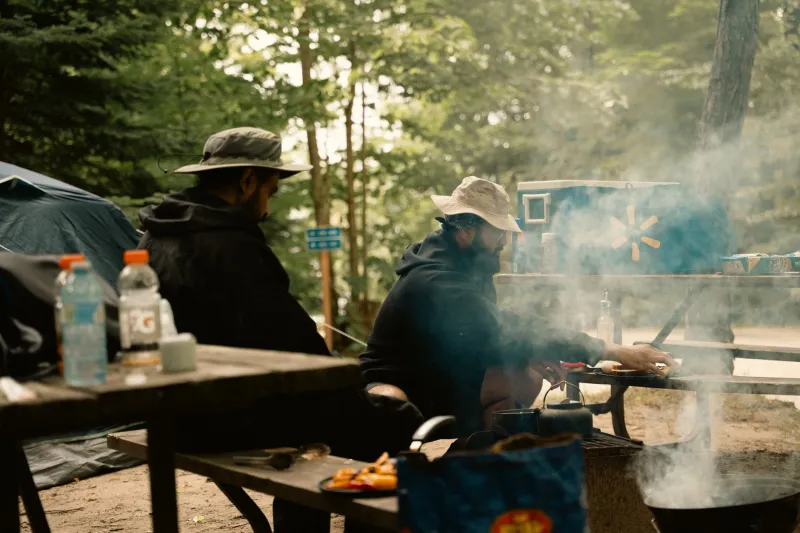
Campground photos are usually taken to show the site, not to explain it. That is fine, but you need to look past the picnic table and the fire ring. Start with the light. Are there hard shadows across the site? Do you see dappled light on the ground? Is the tent pad in full sun while the picnic table sits under a tree? A photo taken in the morning may show long shadows that disappear by afternoon.
Look at the trees, too. A single tall pine can throw a narrow stripe of shade. A broad oak or maple can cover half a site. Leafy deciduous trees are generous in summer, while evergreens often cast shade in a tighter circle. If the photo shows a canopy that reaches over the tent pad and the table, that is a good sign. If the only tree is at the edge of the site, expect the sun to find you.
Also check the ground. Bare dirt and gravel heat up fast and stay bright. Grass, pine needles, and leaf litter stay cooler and feel better underfoot. A site with a little ground cover usually looks more forgiving at two in the afternoon than a dusty clearing with no cover at all.
The Map Tells You More Than the Loop Number
Campground maps are not just for finding the bathhouse. They show how sites sit in relation to roads, open fields, water, and tree lines. A site on the inside of a loop may get shade from a central grove. A site on the outside edge may face open sky all afternoon. A site near a large field might catch a breeze, but it may also bake.
Check the map for open areas. Big lawns, parking lots, and sports fields mean sun. Dense tree symbols mean shade, though not always where you want it. Look at the direction of the loop, too. If you know the site faces west, the afternoon sun will come straight in. East-facing sites often get shade sooner. North-facing sites may stay cooler, while south-facing sites can hold heat.
The map also helps with the practical stuff. A site near the bathroom is handy at night, but it can be noisy in the morning. A site near the playground is fun for kids, but less peaceful for naps. A site on the main road through the campground may have more dust and headlights. Use the map to balance shade with the buffers your family actually needs.
A Five-Minute Shade-First Checklist
Before you click reserve, run through these questions:
- Where will the sun be after lunch? Look for west and southwest exposure. If the site is wide open in that direction, plan for heat.
- Is there canopy over the seating and tent area? A tree at the edge of the site is nice. A tree over the table is better.
- What is underfoot? Grass, needles, and leaves are cooler than gravel or bare dirt.
- Does the ground drain? Shade is lovely until it holds water. Look for low spots, packed dirt, or signs of runoff.
- What is nearby? A tree line can buffer noise. A bathhouse can be convenient. A playground can be both. Know which one your family needs.
- How far is the bathroom? Close enough for a night trip, far enough to avoid constant foot traffic.
When Shade Is Not the Whole Story
A shady site is not automatically a good site. Deep shade can stay damp, especially in spring or after a storm. Too many low branches can make an RV setup tricky. A site under a big tree may be littered with sap, acorns, or bird droppings. And in some campgrounds, the best afternoon shade comes from a ridge or a stand of trees that also blocks the evening breeze.
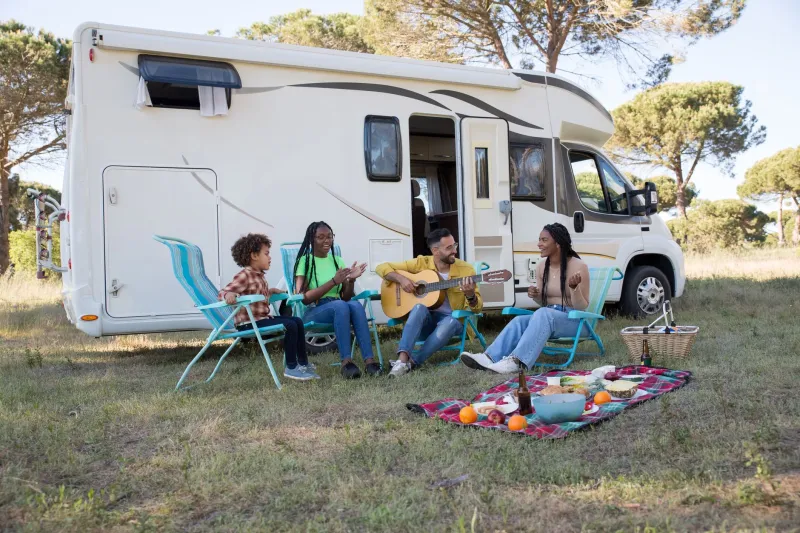
The goal is not maximum shade. It is a site that works with your family's rhythm. If you have early risers, a sunny site may help you get moving. If you have little kids who need a quiet afternoon, shade and a soft place to sit matter more. If you are in a tent, morning shade can help you sleep in. If you are in an RV, you may care more about awning coverage and airflow.
Book With the Afternoon in Mind
Next time you are comparing sites, don't just count the steps to the bathroom. Picture your family at two o'clock. Where will the chairs go? Will the tent be cooking? Is there a tree worth claiming? A few extra minutes of reading the photo, the map, and the tree canopy can turn a convenient site into a comfortable one. That is the kind of campground decision that pays off long after lunch.