Local Wood, Dry Wood: A Family's Campfire Firewood Routine

Photo by Photo by Matt Whitacre on Unsplash on Unsplash
Most campground fires fail for a boring reason: the wood was an afterthought. A damp bundle from a gas station, a few branches gathered in the dark, and a hopeful squirt of lighter fluid do not add up to a dependable campfire. At Duncan's Family Campground, the families who seem relaxed about fire usually have a small routine working behind the scenes. They know what wood they are bringing, where it came from, and what they will do if the rules change.
That routine is worth building before the trip. A good firewood plan protects the forest, keeps you on the right side of campground rules, and gets a fire going while the kids are still interested in watching. Here is the version we recommend for family campers.
Why the Wood You Bring Matters
Firewood is not just fuel. It can be a delivery system for invasive pests and diseases that damage forests. Emerald ash borer, Asian longhorned beetle, and other problems have spread partly through firewood moved from one place to another. A log that looks harmless can carry insects or larvae under the bark.
That is why so many state and federal land managers push the same simple message: buy it where you burn it. Moving leftover wood from home to a campground, or from one campground to the next, can undercut that effort. The risk is not dramatic in the moment. It is cumulative, and it is exactly the kind of thing families can avoid with a little planning.
If you are buying wood near the campground, ask whether it is local or certified heat-treated. Many camp stores sell approved bundles for exactly this reason. Spending a few dollars at the campground store is not just convenient; it also keeps the local wood economy tied to the local landscape.
Read the Rules Before You Pack the Ax
Campground firewood rules vary, and they are not all posted in the same place. Some campgrounds prohibit outside firewood entirely. Some allow only certified heat-treated wood. Some allow gathering only downed deadwood, while others prohibit gathering altogether. A few have seasonal restrictions based on pest quarantines.
Burn bans are a separate layer. Drought, wind, and local fire danger can trigger a ban with little warning. A campground may still allow campfires in designated rings while a county-wide ban is in place, or it may shut down all open flames. The smart move is to check the campground website before you leave, then check again at check-in. If a ban is active, ask what is allowed. A propane fire ring, a camp stove, or a lantern-lit evening may be the plan instead.
Do not treat a burn ban as a suggestion. Dry grass, wind, and crowded loops are a bad combination. The families who handle this well usually have a backup plan already packed: cards, a battery-powered lantern, and maybe a new marshmallow strategy that does not involve an open flame.
Buy, Gather, or Leave It Alone
For most family weekends, buying local firewood is the simplest choice. Look for dry, seasoned hardwood. Avoid painted wood, treated lumber, plywood, and anything that smells like chemicals. Bundles vary in size, so ask how much burn time you can reasonably expect. Two or three bundles is often plenty for a weekend of small evening fires, but that depends on the size of the bundle and how late your family stays up.
Gathering sounds romantic, and sometimes it is allowed. If the campground permits it, stick to small downed branches and dead wood on the ground. Never cut standing trees or strip bark from live ones. Do not gather from protected areas or haul wood in from outside the immediate area. And if the rules say no gathering, believe them.
The easiest mistake to avoid is the leftover-wood shuffle. Do not bring the half-burned logs from last week's trip to a new campground. Leave them at home or follow the campground's disposal guidance. A clean firewood habit is part of leaving the place better than you found it.
The Ten-Minute Fire Kit
A dependable fire is mostly about preparation, not tricks. Keep a small kit together so you are not searching for a lighter while the kids ask whether it is marshmallow time yet.
- A small ax or folding saw for splitting kindling
- Work gloves
- Dry kindling or a few newspaper knots
- Fire starters, kept in a waterproof bag
- A lighter and matches in a sealed container
- A small shovel or fire bucket
- A covered bin to keep wood dry and off the ground
The covered bin matters more than it sounds. Wet wood is the main reason campground fires smoke and sulk. A plastic tote with a lid, or a canvas wood carrier stored under a tarp, keeps your supply dry between evenings. Keep it off the ground and away from the fire ring.
When it is time to build, clear the ring of debris, place tinder in the center, and add kindling in a loose teepee or crisscross. Light it, let it catch, and add larger pieces gradually. A small, hot fire is easier to manage than a towering pile. It also burns cleaner and throws enough heat for a family circle.
A Weekend Rhythm That Works
On the first night, keep it simple: one bundle, dry kindling, and a fire laid before the dinner dishes are finished. On the second night, use the remaining dry wood and let the kids help sort kindling or fill the water bucket. Give each child a small job that is genuinely useful. The fire becomes part of the evening rather than a parent-only project.
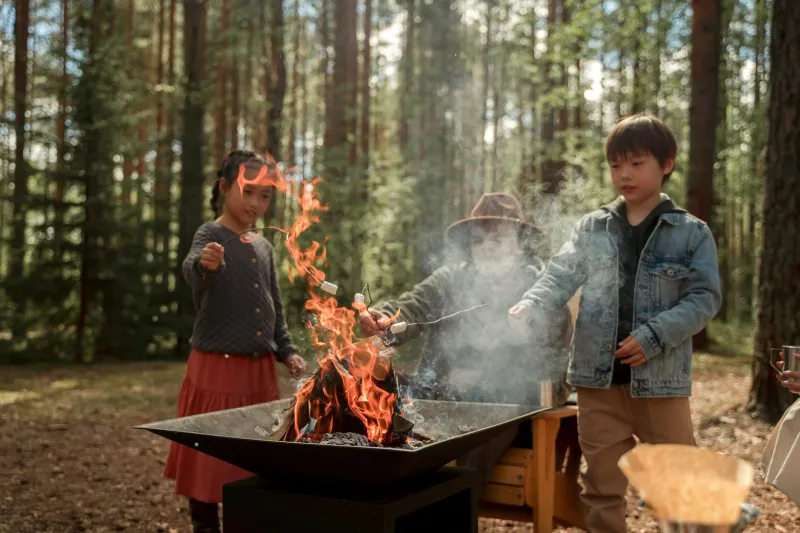
If rain moves in, move the wood bin under cover and skip the heroic fire attempt. If wind picks up, keep the fire small or put it out. The goal is not to prove anything to the weather. The goal is a calm family evening with a warm circle and a bag of marshmallows within reach.
The Packing List Short Version
Before you leave home, confirm the campground's firewood rules and current burn status. Pack a small ax or saw, gloves, dry kindling, fire starters, a lighter, a water bucket, and a covered wood bin. Plan to buy local wood near the campground instead of hauling it from home. If a burn ban is in place, pack the backup evening plan without grumbling.
A campfire is one of the simplest pleasures in family camping, but simple does not mean careless. Burn local, keep it dry, and build small. That is the routine that gets everyone around the ring in time for the first s'more.