Twelve Campfire Tales That Pull Kids Back Into the Circle
The Campfire Is the Original Screen
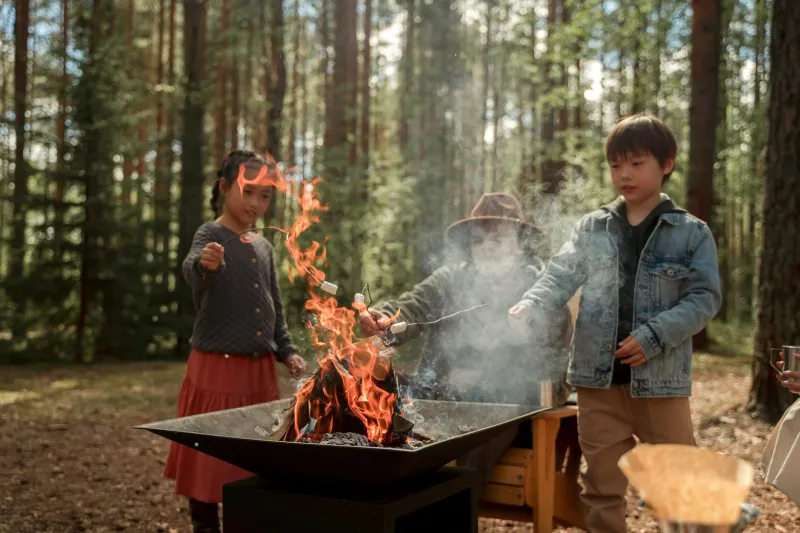
At Duncan's Family Campground, we have watched a lot of marshmallows catch fire and a lot of phones go back into pockets. The trick is not banning screens. The trick is giving kids a job in the story. When a kid gets to make a sound, pick a path, or hold the flashlight, the campfire stops being background entertainment and becomes the main event.
Here are 12 interactive formats we recommend for family campgrounds. Each one works for RVers and tent campers, and each one includes an age range and a quick adaptation note. None of them require Wi-Fi, batteries, or a professional storyteller. A little energy and one good flashlight will do.
12 Interactive Campfire Story Formats
1. Echo Around the Fire (ages 4-8)
You tell a simple tale one line at a time, and the kids repeat the last phrase in a whisper or a growl. Example: You say, The owl called from the pine. They echo, From the pine! Keep it short and rhythmic. RV adaptation: keep the volume low if you are near other rigs. Tent adaptation: turn it into a whisper echo after quiet hours.
2. Sound-Effects Safari (ages 5-10)
Assign each kid a sound: wind, crickets, footsteps, a creaky gate. As you tell a campground adventure, they add their sound on cue. The story gets louder and funnier with every pass. Tip: practice the cues once before you start. In a tent, use claps and knee taps instead of stomps.
3. Choose-Your-Own-Path Tale (ages 7-12)
Offer the group two or three choices at each turn: follow the trail, check the creek, or investigate the glowing cooler. Kids vote with raised hands, and you improvise the next scene. Keep the stakes silly, not scary. This format is easy to stretch across a whole evening. RV tip: use a clipboard and a simple map so kids can track the route.
4. The Three-Object Spell (ages 6-12)
Ask kids to choose three objects from the campsite, such as a stick, a mug, and a bike helmet. Your job is to build a story where all three objects matter. The more ordinary the object, the better the payoff. This one works especially well when attention spans are short because the kids are already invested in the props.
5. Serial Campground Mystery (ages 8-12)
Tell one chapter per night and end on a cliffhanger. The mystery can be small: who moved the picnic table, where did the blue mug go, why is there a tiny door in the bathhouse wall. Keep a running list of clues on a note card. Families who camp for multiple nights get a built-in bedtime ritual.
6. The Lantern at Loop C (ages 6-10)
This is the spooky-but-not-too-spooky classic. A brave kid sees a light bobbing near the edge of the campground and follows it, only to discover a helpful camper or a lost dog. Use suspense, not gore. Let the hero solve the problem. End with a warm laugh and a real lantern flick. If younger kids are present, explain that the story is pretend before you begin.
7. Fairy Tale Remix (ages 5-9)
Start with a familiar tale and ask kids to change one rule. What if the three bears were campers? What if the gingerbread kid had a bike? Let the group shout out changes and weave them in. This is a low-pressure way to get shy kids participating because they already know the story structure.
8. Sing-Along Story (ages 4-8)
Pick a song everyone knows and use it as a cue. Every time the hero crosses a bridge, the group sings a line. Every time the hero sees a raccoon, everyone hums. It sounds chaotic, and it is, but that is the point. Keep the story under ten minutes. Tent tip: use hand motions instead of loud singing if the campground is quiet.
9. Riddle in the Firelight (ages 7-12)
Tell a story with three embedded riddles. The hero cannot move forward until the group solves them. Use campground-themed riddles: What has a ring but no finger? A campfire ring. What has branches but no leaves? A trail map. Write the answers on a card so you do not blank out mid-story.
10. Flashlight Freeze Tale (ages 5-10)
Kids act out the story, and when you click the flashlight off, they freeze. When you click it on, they continue. This burns energy and keeps kids physically involved. Keep the scenes simple: setting up a tent, roasting a marshmallow, spotting a deer. RV tip: clear a small area first and remind kids to watch for fire rings and guy lines.
11. Ancestor Around the Fire (ages 8+)
Tell a family story from a grandparent, aunt, or old family friend. It can be a funny mishap, a first camping trip, or a move to a new town. Then ask kids what they would have done. If you do not have a family story handy, tell a story about the campground itself and invite older campers to add details. This format builds connection without any props.
12. Two-Minute Tale Tournament (ages 7-13)
Give each kid two minutes to tell a story using three required words, such as tent, owl, and pancake. Judges award silly categories: Best Plot Twist, Best Sound Effect, Most Convincing Raccoon. Keep prizes small, like stickers or first pick of the s'mores. This one flips the script and lets kids run the show.
RV and Tent Adaptations That Actually Work
In an RV, you have light and a built-in audience, but you also have neighbors. Keep voices low, use a small battery lantern instead of a big beam, and move the story inside if quiet hours hit. In a tent, lean into whisper stories, hand motions, and short chapters. A campfire is great, but a picnic table and a flashlight work just fine when the fire is out or the rain rolls in.
The Ten-Minute Rule
The best interactive story is the one that ends while kids still want more. Aim for ten minutes for younger kids and twenty minutes for older ones. If attention drifts, stop and ask a question. If the group is hooked, add one more chapter. The goal is not a perfect performance. The goal is a circle of kids leaning in, arguing about the next choice, and forgetting to ask for a phone.
At Duncan's Family Campground, we like to say the campfire is the original screen. It flickers, it crackles, and it rewards participation. Bring a story, bring a flashlight, and let the kids do the rest.