The Two-Lumen Rule: A Family Lighting Kit That Keeps the Loop Dark
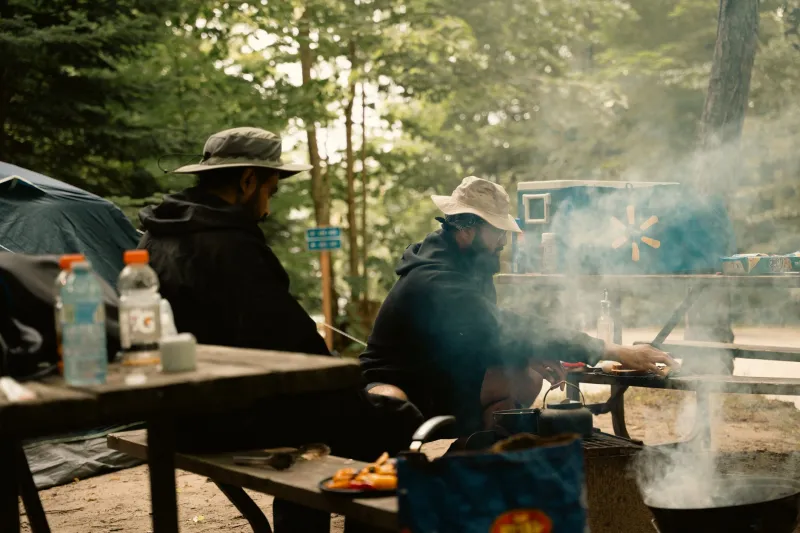
There is a moment on every campground loop when the sun drops behind the trees and the picnic tables start to disappear. That is when the lighting arms race begins. One site clicks on a white floodlight. Another strings up enough bulbs for a parking lot. Pretty soon the whole loop looks like a rest stop, and the stars are doing their best work behind a haze of glare.
At Duncan's Family Campground, we like a dark loop. Not a dangerous dark, not a stumble-around-in-the-woods dark, but a dark that lets kids see the Milky Way and lets tired neighbors sleep. The trick is not packing fewer lights. It is packing the right lights and giving each one a clear job.
Start With a Lighting Budget, Not a Shopping List
Before you buy another lantern, ask what the light is for. Most campsite lighting falls into three jobs: navigation, tasks, and atmosphere. Navigation means finding the tent door or the bathhouse path. Tasks means cooking, reading, or finishing a card game. Atmosphere means the soft glow that makes a campfire feel like a campfire.
You do not need a separate gadget for every job. You need one light per job, and you need each one to stay in its lane. A warm, dimmable lantern can handle the table. A red-light headlamp can handle the walk to the bathroom. A single path light can mark the trip hazard by the tent. That is the whole system.
The two-lumen rule is less about an exact number and more about a habit. Every light has to justify itself twice: once for the job it does, and once for the fact that it does not spill into the next site. If a light fails either test, it stays in the bin.
The Kit: Four Lights and a Charging Ritual
Our family kit is boring on purpose. It starts with two warm low-lumen lanterns, the kind that dim down to a candle-like glow. One lives on the cooking table during dinner cleanup. The other sits on the card table or hangs from a shepherd's hook near the chairs. Look for warm white light, somewhere around 2700K, and avoid anything labeled daylight or tactical unless you are actually hiking out after dark.
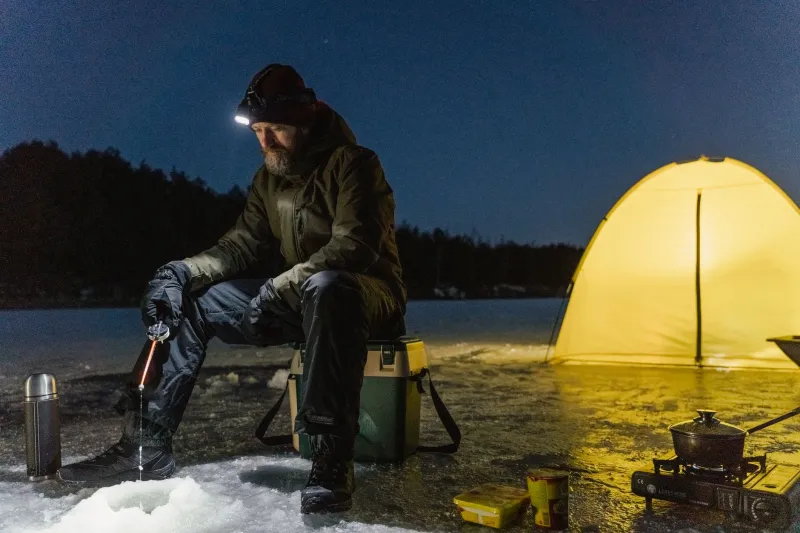
Next come red-light headlamps for the kids. Red light preserves night vision, which matters when you are trying to find the bathhouse without blinding yourself or the raccoon watching from the brush. It also signals to everyone else that you are moving through, not setting up a search grid. Give each kid a headlamp with a red mode and teach them the click sequence before the trip. A headlamp that starts on high white is a liability.
Third, a single solar path light at the tent door or across the main guyline. This is not for reading. It is for keeping a half-asleep kid from walking into a stake at 2 a.m. One is enough. A line of them turns your site into a runway.
Fourth, a small backup flashlight in the kitchen bin. Not for ambient light. For the moment a battery dies or a dog slips a leash. Keep it stored with fresh batteries and check it before every trip.
Charging is its own routine. Rechargeable lanterns and headlamps go on the power bank during the day, or get plugged into the car while you are out hiking. Spare batteries live in a labeled pouch, not loose in the bottom of a tote. Before bed, do a quick sweep: headlamps off, lanterns off, path light still glowing. It takes thirty seconds and saves you from the 9 p.m. scramble when someone decides they need a light for a book.
Deploying After Dinner: A Three-Step Sunset Routine
The best lighting plan is the one everyone can follow without a meeting. Ours has three steps.
First, at dusk, place the path light and set the two lanterns. One goes on the cooking table, one on the card table. Keep both dimmed. The goal is to see your plate, not to signal aircraft.
Second, hand out headlamps. Kids get theirs on red before the first bathroom trip. Adults do the same. If someone needs to read, they can use a lantern at the table, not a headlamp aimed at the page.
Third, set a lights-down time that matches the campground quiet hours. Usually that means the lanterns go off when the card game ends. If the game runs late, switch to a single low lantern and move the table away from the site edge. The path light can stay on if it is small and downward-facing. Everything else goes dark.
Bathroom Trips Without the Floodlight
Night bathroom trips are where campground lighting goes wrong fastest. A kid wakes up, grabs the biggest flashlight, and lights up three tents on the way to the bathhouse. The fix is simple: red headlamps, a known route, and a buddy system for younger kids.
Walk the route in daylight before dinner. Point out the bathhouse door, the water spigot, and the one root that catches toes. At night, the red headlamp gives enough glow to see the path without announcing your family to the entire loop. If your kid is nervous, leave the tent path light on and tell them to look for it on the way back. That little anchor does more than a mega-beam.
Late Card Games and the Neighbor Test
Card games are a campground tradition, and they do not have to end at sunset. But they do need a shade. A lantern with a frosted globe or a simple diffuser keeps the light on the table instead of in your neighbor's tent. Lower the output as the night goes on. If you can read the card faces at arm's length, you have enough light.
The neighbor test is the one we use: stand at the edge of your site and look toward the nearest tent. If you can read a book by the light spilling over there, your lantern is too bright or too high. Move it lower, dim it, or turn it off. Nobody books a campsite hoping to fall asleep under your porch light.
When to Break Your Own Rule
There are real exceptions. A storm, a lost kid, a medical issue, a dog on the loose. In those moments, use the white light and use it well. Safety beats etiquette every time. But the default should be dark and calm, with lights that show up only when they have a job.
The reward is not just polite neighbors. It is a better campground night. Kids see more stars. Adults talk in lower voices. The loop settles. And somewhere around 10 p.m., when the last lantern clicks off, the dark does the rest.