Kid-Powered Campouts: A Chore Card System for Smoother Setups and Pack-Outs
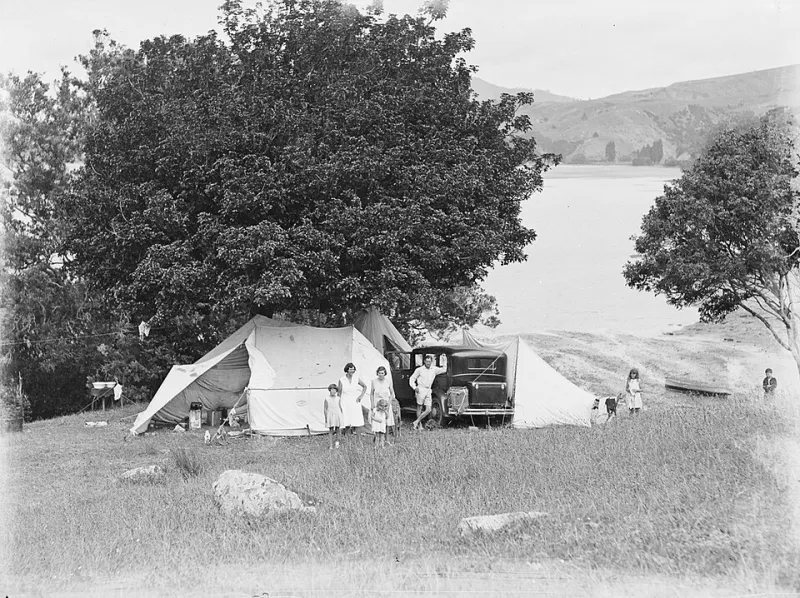
Photo: Collins, Tudor Washington, 1898-1970, photographer, CC BY 4.0, via Wikimedia Commons
There is a particular kind of campground chaos that happens when the vehicle door opens and everyone piles out at once. One kid wants the bathroom, another wants the playground, the dog wants everything, and you are standing on the pad holding a bin of tent poles wondering why nobody is helping. The truth is, most kids do want to help. They just don't know what helping looks like at a campsite. "Grab something" is not a job. "Put the blue bin under the picnic table" is.
At Duncan's Family Campground, we see this play out every weekend: families who arrive as a tornado and leave as a well-oiled machine, or the reverse. The difference is rarely luck. It is usually a simple plan that gives kids real work without turning the campsite into a chore war.
The Three-Slot Idea: Arrival, Daily, Pack-Out
Instead of handing out a long list of tasks, give each child one job for each phase of the trip. That's it. One arrival job, one daily upkeep job, and one pack-out job. Three small responsibilities, clearly named, written down, and owned.
Why three? Because three fits on an index card. Three is easy to remember. Three is enough to be useful without overwhelming a seven-year-old who would rather be looking for frogs. And when the jobs are divided by phase, nobody is stuck doing all the heavy lifting at the end while everyone else drifts toward the car.
A good job has three qualities: it is genuinely needed, it has a clear finish line, and it can be done without a parent hovering. "Help with the tent" fails all three. "Lay the stakes in a row by the tent door" passes.
The Chore Card, Not the Chore Chart
Forget the wall chart with star stickers. At a campground, you need something portable. A 3-by-5 index card works beautifully. Write the child's name at the top, draw three boxes, and label them Arrival, Daily, and Pack-Out. Under each heading, write one job in plain language. Laminate it or slide it into a zip-top bag, punch a hole, and clip it to a backpack or lanyard.
Kids can check off boxes with a dry-erase marker. The card lives with them, not on a picnic table that gets moved six times before dinner. If you want a family version, make one card per child and one master card for the adults. Tape the master to the cooler lid. It is low-tech, weather-resistant, and impossible to ignore when someone asks, "What am I supposed to do?"
Picking Jobs That Actually Matter
The fastest way to kill a chore system is to invent fake work. Kids can tell. If the job is "organize the rocks," they know it is busywork. Choose tasks that make the campsite safer, cleaner, or easier for everyone.
For arrival, think about the first fifteen minutes. Someone can unload the soft items—sleeping bags, pillows, jackets—to a dry spot. Someone can set the picnic table with the tablecloth and clips. Someone can lay out the camp chairs in a circle. Someone can test the flashlights and put fresh batteries in the lantern. These are real jobs that save a parent from doing six things at once.
For daily upkeep, focus on the routines that keep a site from turning into a heap. A child can be the trash captain after breakfast, the shoe wrangler at the tent door, the dish-drying helper, or the firewood coverer if rain is coming. Daily jobs should take five to ten minutes, not an hour.
For pack-out, assign jobs that happen before the big stuff gets folded. Someone can collect all the tent stakes into a stake bag. Someone can sweep the pad with a broom. Someone can gather the clothesline and clothespins. Someone can do a final loop for trash, toys, and stray socks. Pack-out jobs are the ones that prevent the dreaded "we left the good flashlight" moment an hour down the road.
Ages and Stages: Real Jobs From Toddlers to Teens
Toddlers can help in small, supervised ways. A two- or three-year-old can carry a single lightweight item to a designated spot, put shoes in a bin, or hand you stakes one at a time. The job is not about efficiency. It is about being part of the team.
Preschoolers can set out camp chairs, put plastic plates and cups on the picnic table, or collect kindling in a small bucket. They can also be the official flashlight tester, which is mostly a license to click a button and feel important.
School-age kids can handle more independence. A six- to nine-year-old can lay out sleeping bags inside the tent, fill water bottles, sort recycling, or sweep the pad. They can also be responsible for a small gear bin that has a clear home.
Tweens can take on jobs with a little more weight: setting up the camp stove with an adult nearby, organizing the food bin, or managing the trash and recycling run to the campground dumpster. Teens can own bigger pieces—tent setup, awning assistance, cooking a simple meal, or supervising a younger sibling's job. The key is to give them real responsibility, not just the jobs nobody else wants.
Rotate Without the Scorekeeping
Fair does not mean identical. A teen's job may take longer than a toddler's, and that is fine. Rotate jobs every few days or every trip so nobody gets stuck with trash duty forever. A simple rule: on the third morning, everyone swaps daily jobs. Arrival and pack-out jobs can rotate by trip.
Avoid turning rotation into a scoreboard. The goal is shared work, not a competition. If one child finishes early, they can help someone else or enjoy the payoff—an extra few minutes of bike riding before dinner. That natural consequence teaches more than a lecture about teamwork.
Set the Standard Once
A job is not done until it is done to the family standard. That standard should be demonstrated, not assumed. Show your child how the stakes go in the bag, how the tablecloth gets clipped, or how the trash bag gets tied. Do it together the first time. The second time, watch. The third time, walk away.
If the work needs redoing, resist the urge to silently fix it. Call the child back and show them the finish line. "The stakes go in the bag, not under the cooler" is a clear correction. "You did it wrong" is not. The point is not perfection. The point is that the job actually helps.
When the Plan Falls Apart
Rain, late arrivals, and cranky afternoons happen. On those days, shrink the jobs. Maybe arrival jobs get skipped and everyone just gets dry. Maybe daily jobs become "one thing each" before dinner. The chore card is a tool, not a contract. Flexibility keeps the system alive.
The payoff is not a perfectly organized campsite. It is a campsite where the work is shared, the kids know they matter, and the adults get to sit down a little sooner. That is a better camping trip for everyone—and it starts with three small jobs on a card.


