Which Way Is It Blowing? A Five-Minute Wind Walk Before You Unroll the Awning

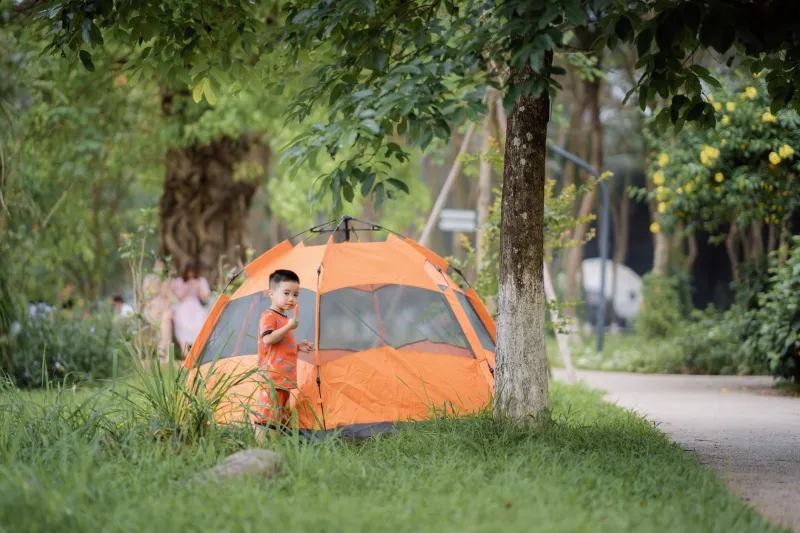
Photo by Photo by Stephanie Klepacki on Unsplash on Unsplash
The first time our awning turned into a sail, we were still carrying the cooler. One gust came through the loop, the fabric filled like a parachute, and suddenly two adults were hanging off an aluminum arm while a nine-year-old shouted advice from the picnic table. Nobody got hurt. The trip still started badly.
We fixed that with a routine, not a purchase. Before the leveling blocks come out, somebody in our family walks the site and reads the wind. It has become as automatic as checking for hookups, and it works the same whether we're in a 30-foot travel trailer or pitching a tent under a shade tree.
Look Up First, Then Look Down
Stand at the site's edge with your back to the road and just watch for thirty seconds. Treetops tell you more than the weather app will. If the upper branches are moving and the lower ones are quiet, that's a steady breeze building with height — annoying for tarps, usually fine for awnings. If the whole canopy shifts at once in one direction, that's a stronger, more organized wind and worth planning around.
Grass and dust are your ground-level report. Watch whether the blades lean consistently or snap and settle. Flags at the camp store, the ribbons on a neighbor's dog leash, and the drift of smoke from a fire pit all confirm what you're seeing. Then check the forecast for gusts, not just sustained speed. A day forecast at eight miles per hour with gusts to twenty-five is an awning day that ends early.
Coastal and plains campgrounds behave differently from a wooded loop in the Midwest. Open ground gives wind a clean run at you. Trees break it up, but they also drop limbs, so a breezy afternoon under a dead oak is its own kind of no.
Pick Your Orientation Before You Pick Your Spot
On a pull-through, you often have a choice about which way the rig faces. Point the nose into the prevailing wind. That keeps the windshield and the entry door on the leeward side and lets the trailer's shape do the work of shedding gusts instead of catching them.
For tents, low and tucked beats scenic and exposed. Trade the ridge-top view for the lee side of a shrub line or a small rise. Set the low end of the tent into the wind and orient the door away from it, so a gust pushes the wall rather than peeling open the entrance.
Ask the camp host which direction the afternoon wind usually comes from. In a lot of places it's remarkably consistent — the same push of air that builds after lunch and dies at dusk. Five minutes of conversation beats an hour of re-staking.
Four Jobs, Five Minutes
We hand out roles before anyone opens a storage bay. It keeps the setup from becoming five people doing the same job badly.
- The scout walks the perimeter and calls out which direction the wind is coming from and where it's gusting hardest.
- The anchor handles stakes, sandbags, and water jugs — weight goes in before fabric goes up, always.
- The kid wrangler clears children and bikes out of the drop zone and marks the line where nobody stands while hardware is moving.
- The cranker runs the awning and stops the second it starts to lift.
That's it. No clipboard, no meeting. The whole thing folds into the first few minutes of arriving, and it gives kids a real job instead of a warning to stay out of the way.
Draw the Kid-Safe Zone Out Loud
Awnings and guy lines are the two things that hurt people at a campground, and both are nearly invisible to a kid on a scooter. We walk the boundary out loud: from the picnic table to that birch tree, from the fire ring to the edge of the gravel. Nobody inside that rectangle rides, runs, or drops a ball.
Guy lines get flagged with bright cord or a strip of reflective tape. Chairs stay folded or weighted until the wind settles, because an unoccupied camp chair on a gusty afternoon is a small, determined animal that will find your shin.
Some Days the Awning Stays Rolled
Here's the part that took us a few seasons to learn: skipping the awning is not a defeat. If gusts are forecast over roughly twenty-five miles per hour, or the sky has that green-gray look of an afternoon thunderstorm building, we leave it furled. We put up a small shade tarp on the leeward side of the trailer instead, strung low with two tie-downs rather than a towering canopy.
Never rig a tarp as a sail and walk away from it. A tarp over a picnic table in a gust behaves like a wing, and it will lift the table. Keep pitches shallow, keep straps short, and use spring-loaded tie-downs rather than bare bungees, which stretch and snap back with a nasty bite.
Nighttime is its own rule. If the awning is out and you're going to bed, roll it up. Wind that seems gentle at ten o'clock can arrive with a front at two in the morning, and you do not want to be the person outside in a bathrobe wrestling aluminum in the dark.
A Drill Worth Repeating
We run this check every arrival, even on still days, because the point isn't the wind itself — it's the habit of looking before we commit. The kids now spot a leaning flag before I do. The five minutes we spend reading the site are five minutes we don't spend chasing a camp chair across the loop, and that trade is worth making every single trip in 2026.